Introduction
In the realm of contemporary American architecture and luxury home design, interior pivot doors have transcended their utilitarian origins to become striking architectural focal points. Unlike traditional hinged doors, pivot doors offer dynamic movement, enhanced visual impact, and a canvas for material craftsmanship that can define and enrich interior spaces. This article delves into how interior pivot doors can be thoughtfully designed to serve not only as passageways but as signature elements that anchor the character and flow of high-end residences.
What Makes Interior Pivot Doors Ideal as Architectural Focal Points?
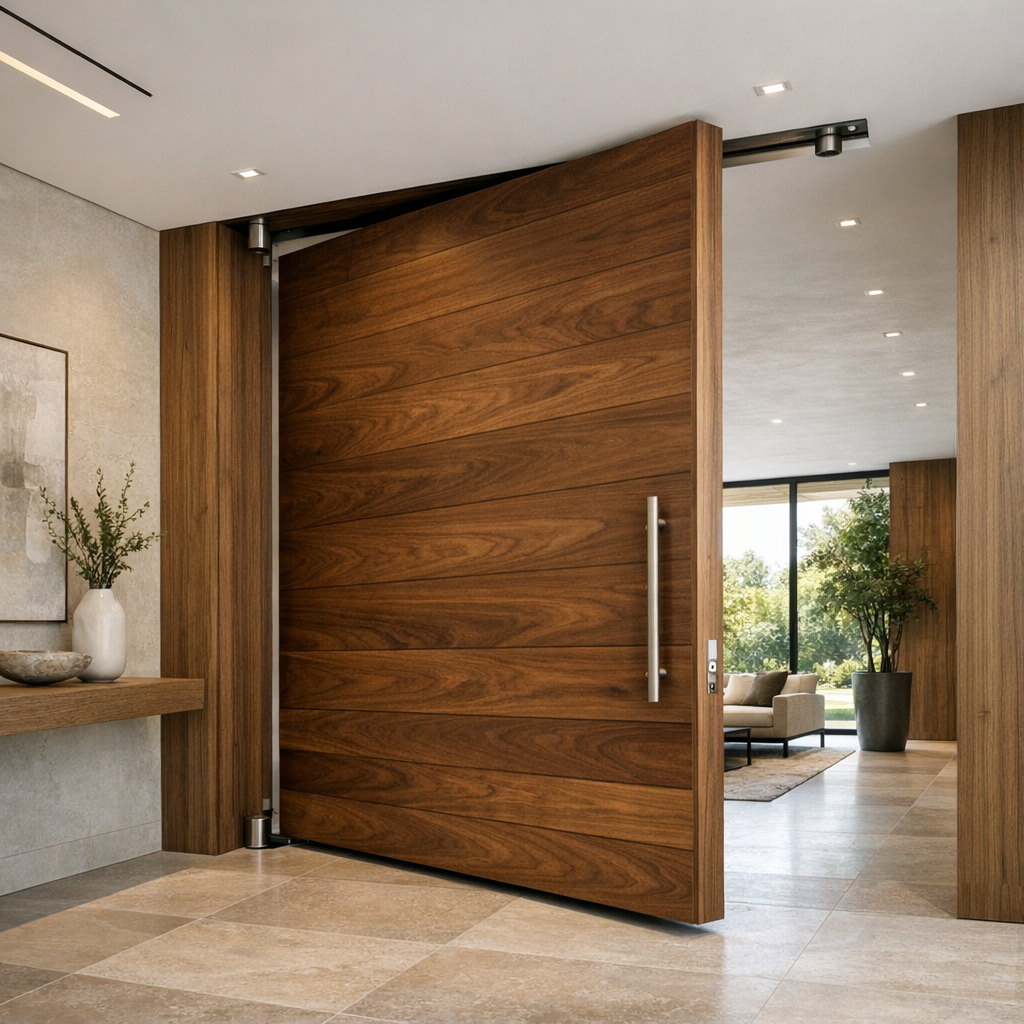
Several characteristics of interior pivot doors make them inherently suitable as feature pieces in luxury environments. Central pivot hardware supports heavier and wider door panels, enabling grand scales and unique proportions rarely achievable with traditional doors. The hinge mechanism allows doors to rotate on a vertical axis, creating a visually engaging opening and closing action that invites attention.
Additionally, the pivot system permits flush mounting with walls and floors, facilitating minimalist or monolithic appearances. This capability supports creative freedom in materials and finishes, allowing these doors to blend harmoniously or contrast dramatically with surrounding architecture.
Design Strategies for Using Interior Pivot Doors as Focal Points
1. Scale and Placement
To maximize the impact of a pivot door as an architectural statement, designers often select oversized dimensions that become proportional centerpieces in entryways, living rooms, or gallery-like corridors. Positioning the pivot door as a transitional threshold between distinct zones within an open-plan layout reinforces its prominence.
Careful spatial planning ensures that the door’s swing radius complements the room’s circulation without compromising usability. For example, a pivot door placed at the intersection of a formal dining area and a kitchen can elegantly delineate spaces while maintaining openness.
2. Materiality and Finish
Material choice profoundly affects a pivot door’s aesthetic presence. Common luxury materials include rich veneers such as walnut, oak, or exotic hardwoods; seamless glass panels for transparency; and metal claddings like brushed stainless steel or bronze for a contemporary edge.
Combining materials, such as pairing wood with glass inserts or metal trim, can elevate the door’s textural depth and visual complexity. Finishes may range from high-gloss lacquers to matte oils, each creating distinct moods. Considerations around durability and maintenance also guide final selections.
3. Integration with Architectural Elements
A holistic design approach aligns the pivot door with adjacent walls, flooring, and ceiling details. Recessed pivot door installations can yield flush surfaces that mimic a continuous plane, especially when paired with concealed hardware and carefully matched coatings.
In luxury interiors, pivot doors may also incorporate sidelights or transoms, reinforcing their monumental character. Lighting design further accentuates doors by creating highlights and shadows that enhance three-dimensionality and tactile quality.
Technical Considerations for Luxurious Pivot Door Installations
While focusing on design, technical considerations must not be overlooked to guarantee performance and longevity. Precision engineering ensures smooth pivot action without sagging or binding, crucial for large-format doors. The pivot bracket placement, typically located a few inches from the door edge, balances weight and enables effortless rotation.
Acoustic sealing and fire-rating requirements are essential in certain applications, requiring tailored solutions such as perimeter gaskets or specialized cores. The choice of pivot hardware and door weight limit must align with these functional needs.
Professional installation by experienced specialists is recommended to integrate complex hardware systems and achieve flawless alignment.
Case Study Examples and Inspiration
Projects featured by DAYORIS, a premier resource for premium architectural interior doors, show exemplary applications of pivot doors as focal points. They highlight doors that range from seamless, flush designs that vanish when closed, to commanding sculptural forms that serve as experiential entrances within living spaces.
For instance, a luxury residence may employ a floor-to-ceiling walnut pivot door as the centerpiece of a great room, contrasted against white plaster walls and polished concrete floors. The tactile grain of the wood and the door’s scale create a warm yet imposing effect engaging visitors upon entry.
How to Choose the Right Interior Pivot Door for Your Project
Selecting the perfect pivot door involves aligning aesthetic goals with practical realities. Homeowners and designers should consider the following steps:
- Assess the spatial context: Measure swing clearances and identify sightlines to understand the door’s optimal placement.
- Determine desired visual impact: Decide whether the door should blend with its surroundings or serve as a dramatic accent.
- Choose materials aligned with the home’s architectural language: Wood, glass, or metal should complement existing elements.
- Consult professional installers: Engage specialists to evaluate technical feasibility and hardware options.
- Explore design inspiration: Resources like Interior Pivot Door’s pivot door collection and DAYORIS offer curated examples showcasing diverse styles.
Conclusion
Interior pivot doors have emerged as compelling architectural features that redefine space, movement, and aesthetic narrative in luxury homes. Through deliberate choices in scale, materiality, and integration, these doors fulfill roles far beyond simple passageways—they become focal points that express craftsmanship, ingenuity, and contemporary sophistication.
Whether seeking to emphasize openness or delineate distinctive zones, architects and designers can leverage the unique properties of interior pivot doors to orchestrate memorable spatial experiences. For those pursuing refined door solutions, the professional insights and inspirational collections showcased at Interior Pivot Door and DAYORIS provide invaluable guidance to inform your project’s success.