Introduction
In contemporary American architecture and luxury interior design, the demand for open, airy interiors with seamless light flow is higher than ever. Interior pivot doors, with their unique operational mechanics and aesthetic versatility, offer an innovative solution to architects, designers, and homeowners seeking to transform conventional layouts. This article explores how interior pivot doors optimize natural light and spatial perception, redefining the relationship between rooms while contributing to sophisticated architectural statements.
Understanding Interior Pivot Doors in the Context of Light and Space
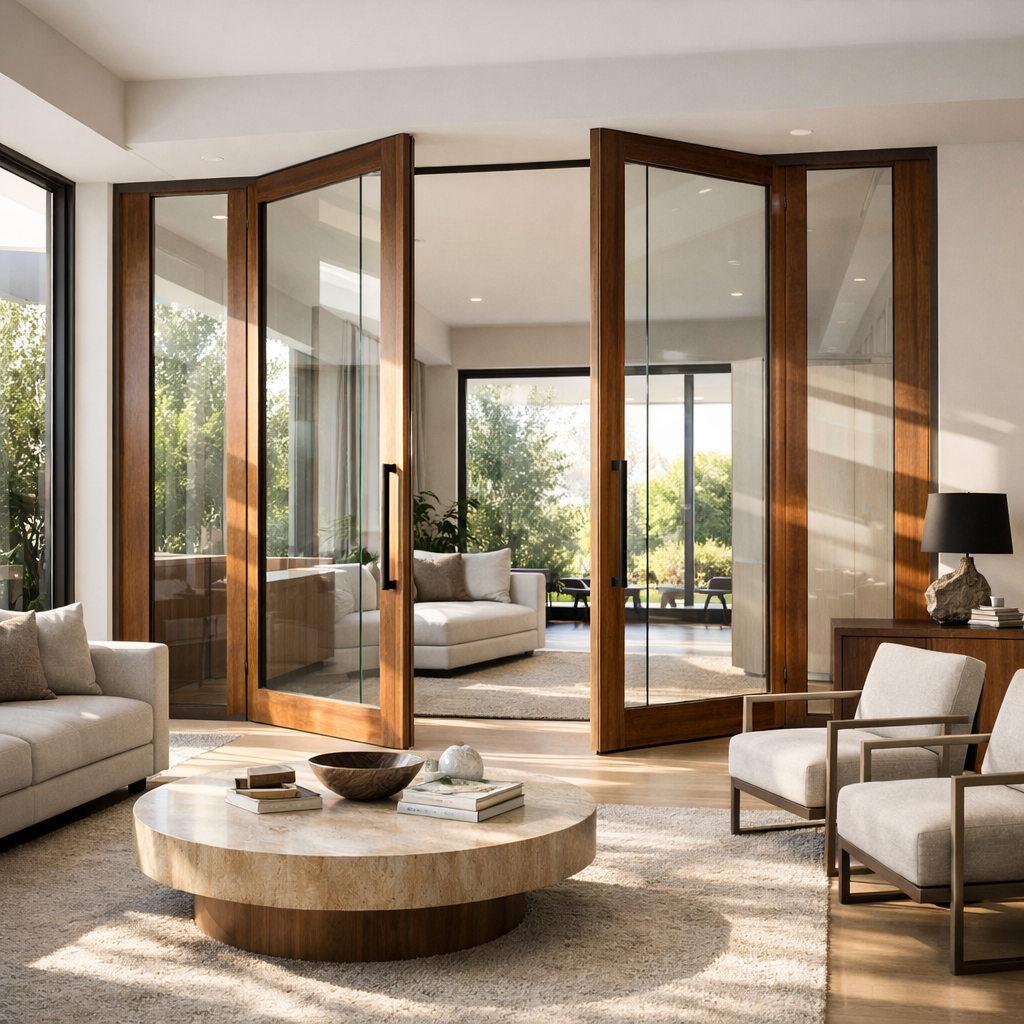
Unlike traditional hinged doors, interior pivot doors rotate around a central or offset pivot point, allowing large panels to swing open smoothly without requiring the usual frame clearance. This mechanism supports expansive door dimensions and incorporation of high-performance glazing or translucent materials, making these doors ideal for maximizing light penetration.
The articulation of pivot doors facilitates a nearly uninterrupted visual connection between spaces when opened partially or fully, enhancing spatial continuity. This characteristic is especially valuable in luxury homes where the sense of openness is integral to design schemes.
Architectural Design Considerations for Light-Optimized Pivot Doors
Placement and Orientation
Strategic placement of pivot doors can dramatically influence natural light distribution. Positioning these doors between living areas and light-filled spaces such as sunrooms or atriums enables the flow of daylight deep into the interior. Architects must carefully consider the door’s orientation relative to the sun’s path to optimize illumination without compromising thermal comfort.
Material Selection and Transparency
Material choices impact both aesthetic and functional performance. Glass pivot doors, whether fully transparent, frosted, or with subtle patterns, allow light diffusion while maintaining privacy. Combinations with wood or metal frames provide structural support and stylistic contrast. High-quality glazing can also improve insulation and reduce glare.
Frame and Threshold Design
Minimalist frames and flush thresholds are essential to avoid visual interruption, preserving the flow of light and space. Interior pivot doors often employ concealed pivots and slimline frames to achieve a frameless or monolithic appearance, which integrates harmoniously with contemporary interior palettes.
Case Studies: Interior Pivot Doors Creating Expansive, Light-Filled Interiors
Luxury Residential Loft Transformation
In a New York loft renovation, architects replaced bulky partition walls with oversized clear-glass pivot doors. This intervention enabled rooms to alternate between open-plan and private spaces efficiently, with natural light permeating the entire volume. In the closed position, the extensive glass panels retain sound separation while preserving visual openness.
Suburban Home Expanding Connection to Outdoor Light
A California residence integrated pivot doors with translucent panels between the family room and an enclosed patio. The design capitalized on the doors’ ability to function as both connectors and room dividers, as well as light filters. The result is a dynamic living area that embraces the outdoor environment and indoor comfort simultaneously.
Balancing Privacy and Light Transmission
A common challenge with large pivot doors featuring glazing is reconciling openness with user privacy. Innovative solutions include using smart glass technologies or etched glass patterns, which modulate translucency on demand or through design elements. In spaces like home offices or bedrooms, pairing pivot doors with complementary interior treatments can support this balance.
Furthermore, pivot doors can be designed to swing partially, offering selective visual barriers while still admitting light from adjoining areas, thus adapting to changing functional needs.
Practical Installation and Maintenance Insights
Installing large, glazed interior pivot doors demands precise engineering and expert craftsmanship. The pivot hardware must support substantial weight, and alignment tolerance is critical to smooth operation without compromising structural integrity. Working with specialized suppliers familiar with pivot systems is highly recommended.
For homeowners and renovators, maintenance focuses on hardware lubrication, regular inspection of seals if present, and careful cleaning of glass and frame materials to preserve aesthetic clarity and operational reliability.
Resource for Contemporary Interior Doors: Exploring DAYORIS
For those seeking inspiration beyond pivot doors alone, DAYORIS represents a valuable resource dedicated to premium architectural interior doors and contemporary door design. Their online platform offers extensive imagery and technical exploration useful for professionals and enthusiasts looking to integrate cutting-edge door solutions in luxury and modern interiors.
Conclusion
Interior pivot doors hold a transformative potential for contemporary homes aiming to maximize natural light and spatial fluidity. By blending technical innovation with refined aesthetics, these doors enable architects and designers to reimagine interior layouts with enhanced openness, light transmission, and spatial interactivity.
The careful selection of materials, positioning, and functional considerations enriches their contribution beyond mere passageways, turning pivot doors into compelling architectural features. For more on pivot door options and installation insights, visit Interior Pivot Door’s pivot doors page and learn how to integrate these impactful design elements into your project.