ARCHITECTURAL INTERIOR DOORS
Interior Pivot Doors: A New Perspective on Space
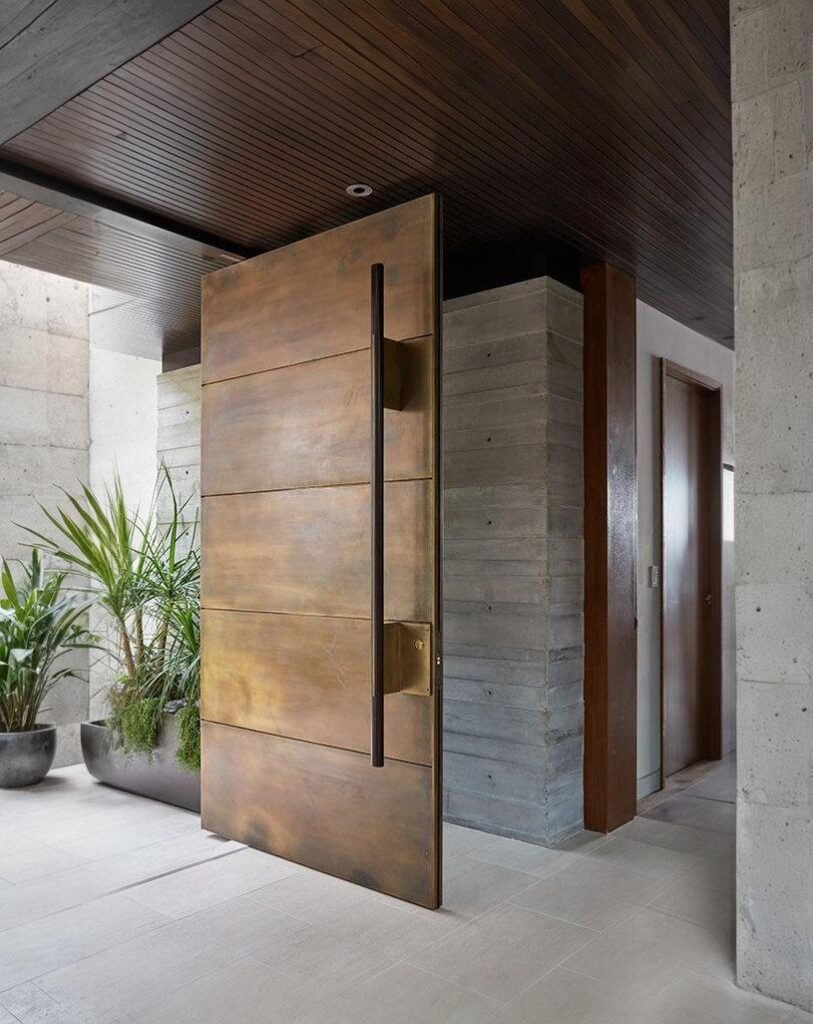
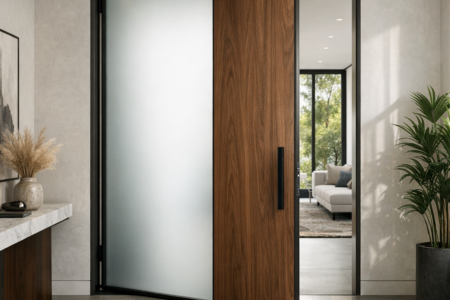
A pivot door is more than a way to move from one room to another. It is an architectural element that shapes the experience of a space, creating an interplay between movement, proportion, light and material. From understated contemporary homes to dramatic residential interiors, pivot doors bring a sense of intention to the everyday act of opening a door. Unlike a traditional side-hinged door, a pivot door rotates around a vertical axis set in from the panel edge. This characteristic motion can transform a simple passage into a distinctive design feature. At Interior Pivot Door, we explore the ideas, materials and planning considerations that help architects, designers and homeowners create elegant, practical interior transitions. Our goal is to offer thoughtful inspiration and useful guidance rather than one-size-fits-all recommendations.
THE DESIGN PHILOSOPHY
Why Pivot Doors Belong in Contemporary Architecture
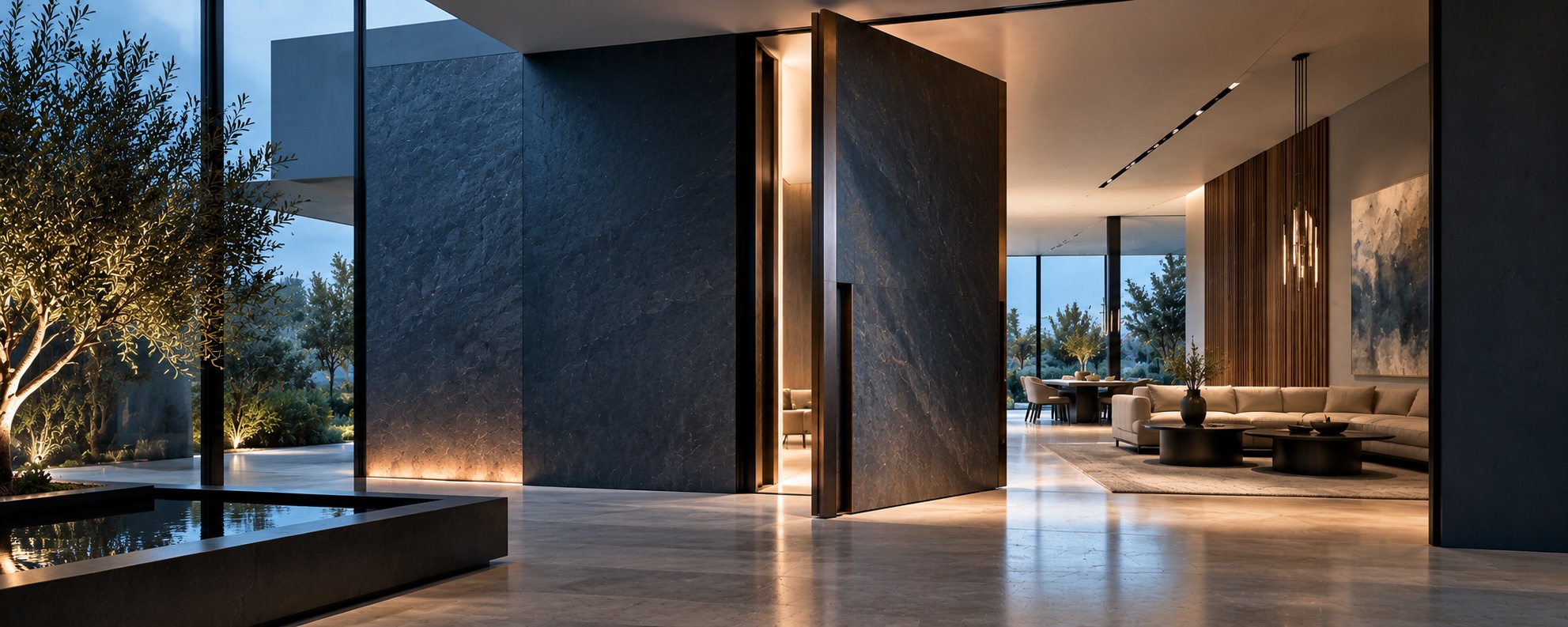
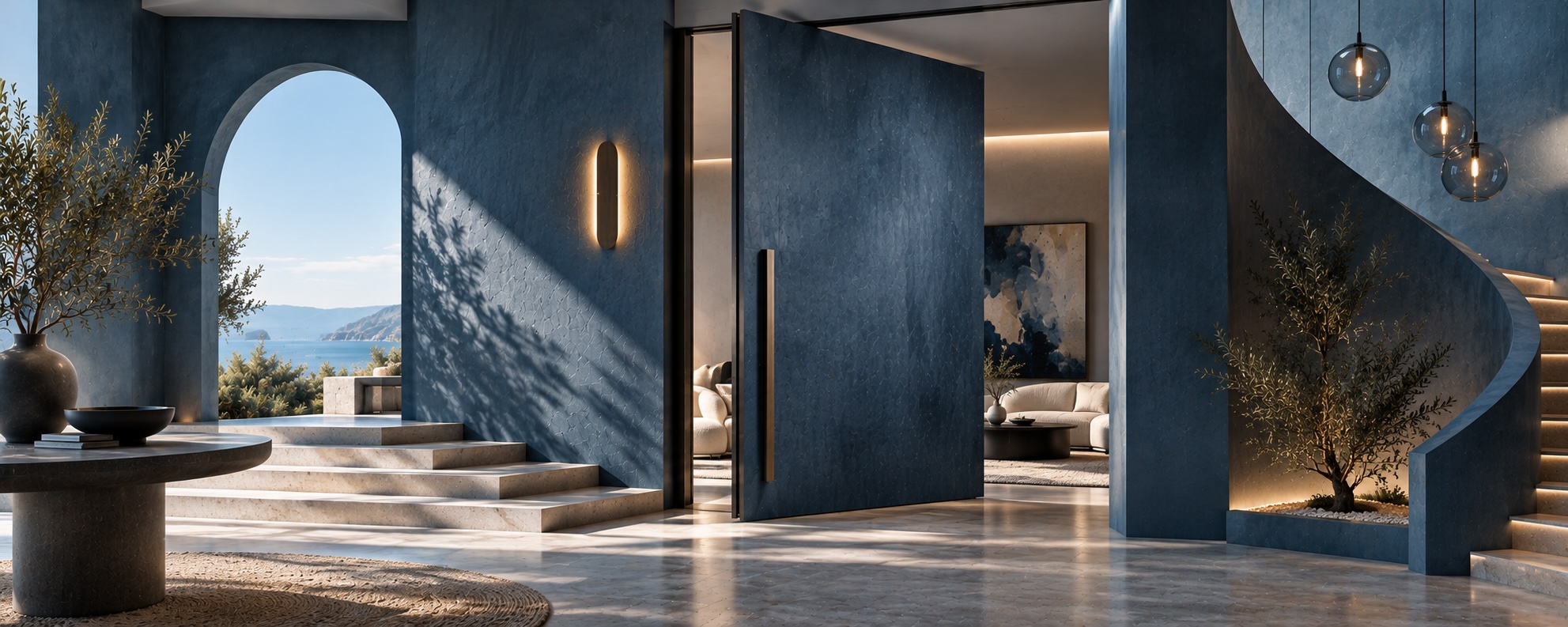
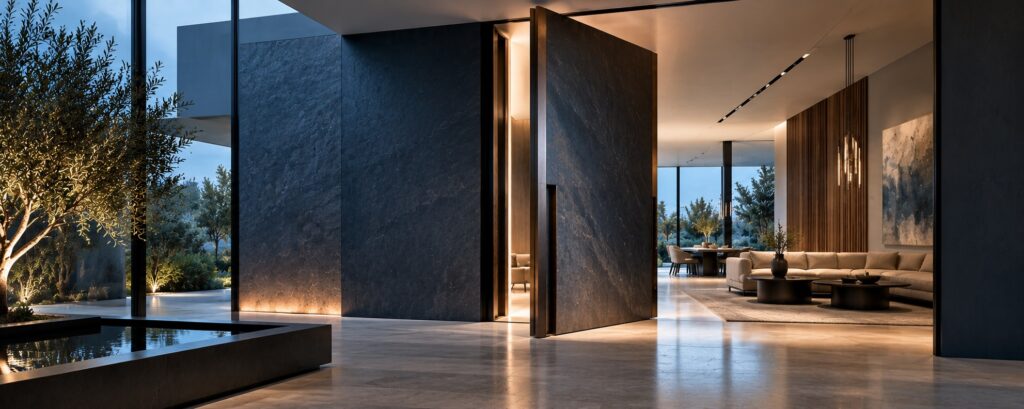
Contemporary interiors often emphasize continuous surfaces, generous proportions and carefully controlled visual detail. Pivot doors can support this approach by becoming an integrated part of the architectural composition. In an open-plan living area, a tall pivot panel may define a transition without disrupting the wider aesthetic. In a minimalist hallway, a flush-finished pivot door can preserve the quiet rhythm of the wall. And in a striking entrance, a richly textured panel can become a focal point in its own right. The best result comes from understanding the relationship between the opening, the panel, surrounding walls, floor finishes and circulation patterns. The door should feel designed with the space, not simply added to it.
DESIGN APPLICATIONS
Floor-to-Ceiling Pivot Doors
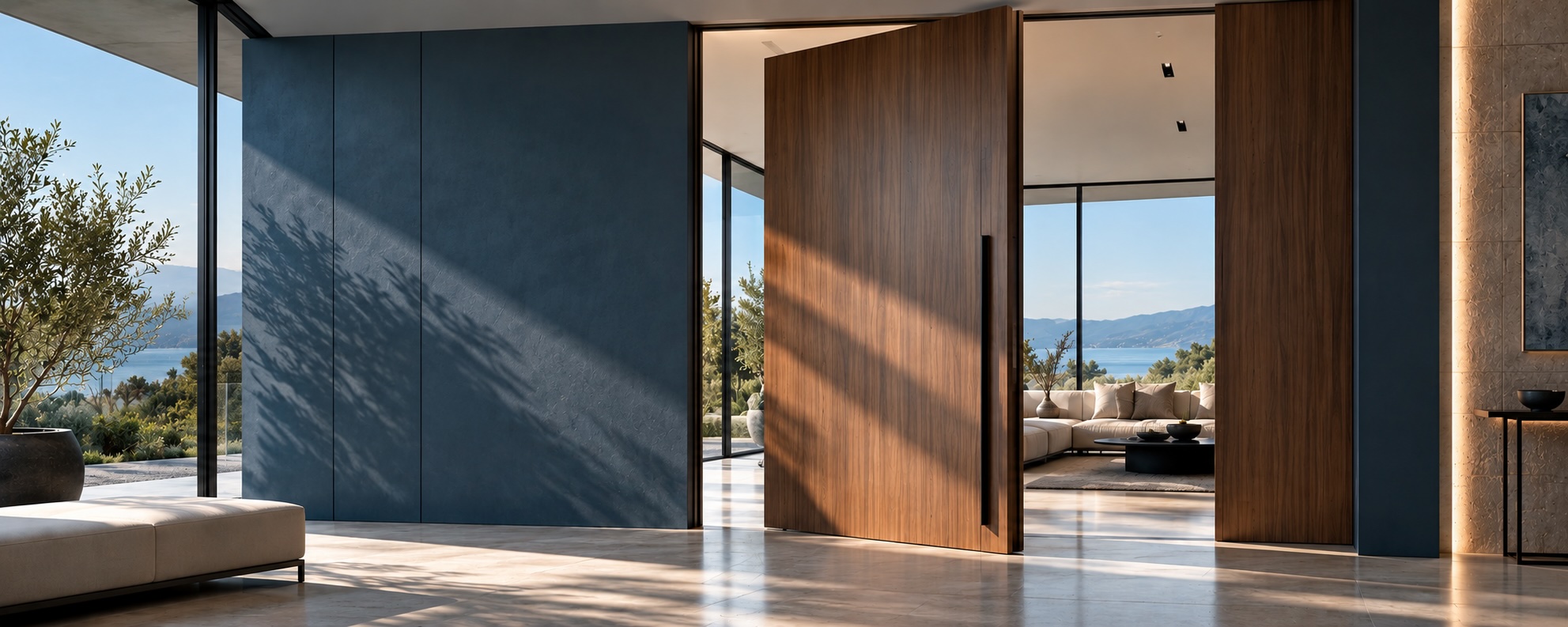
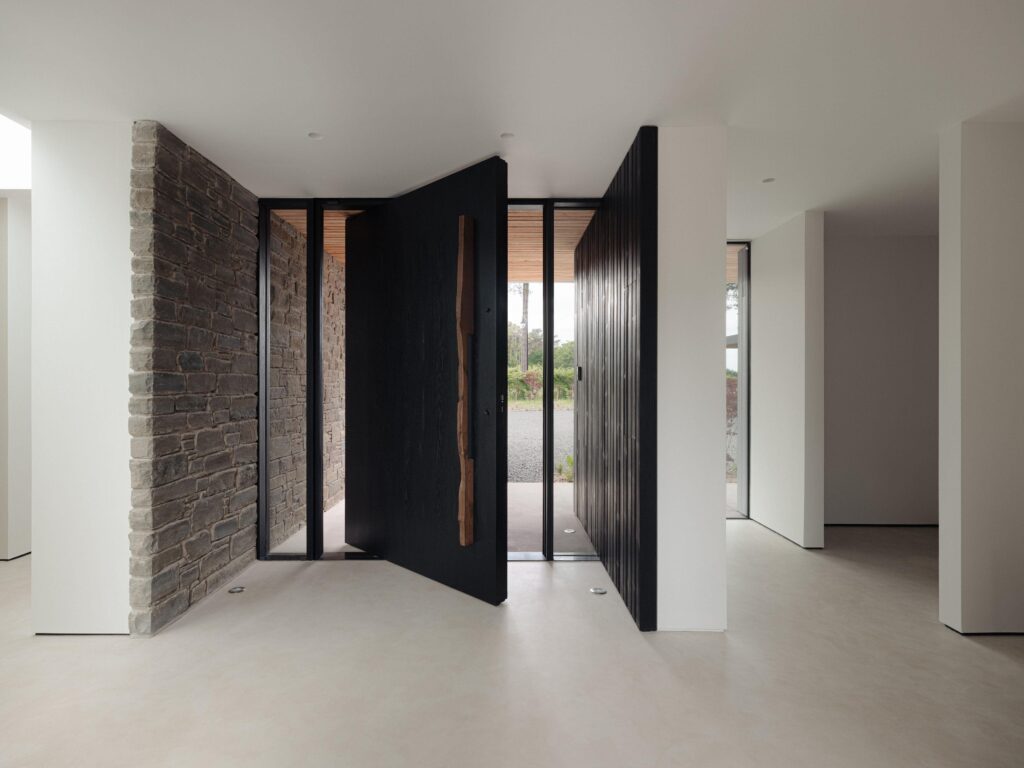
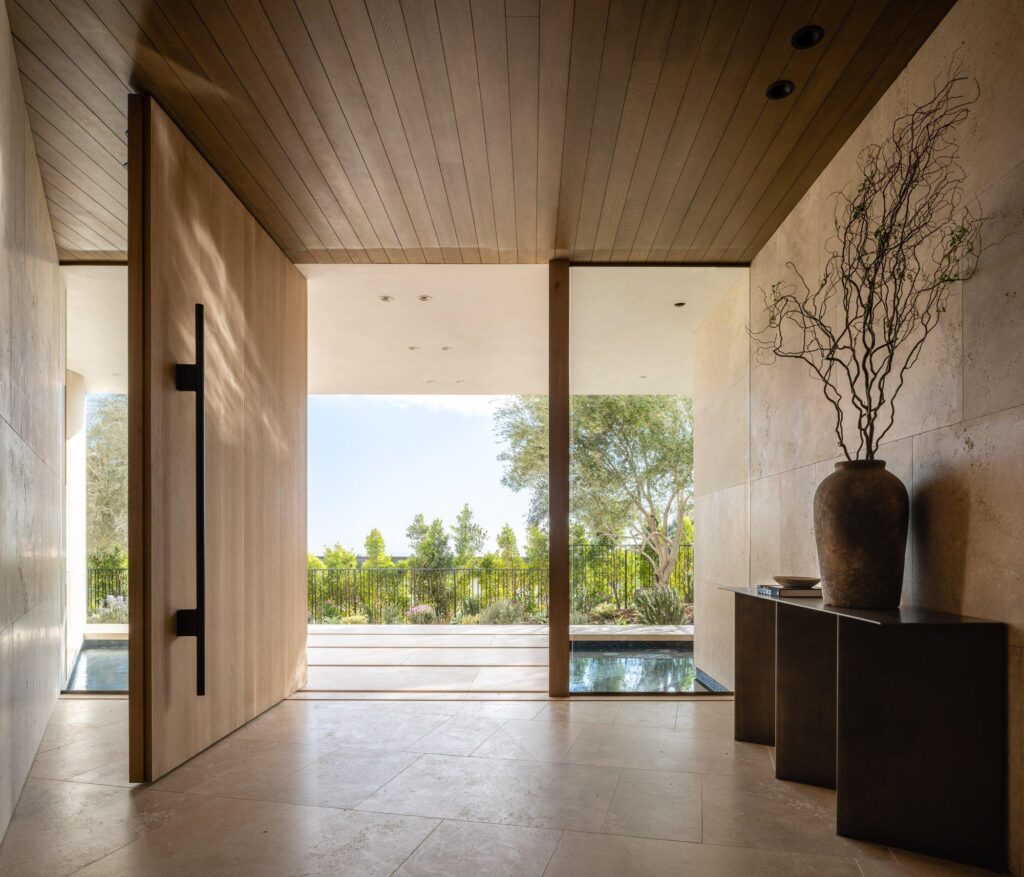
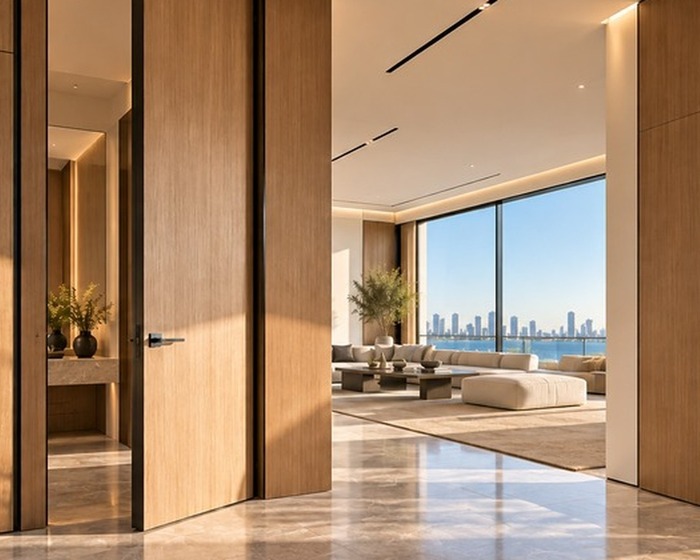
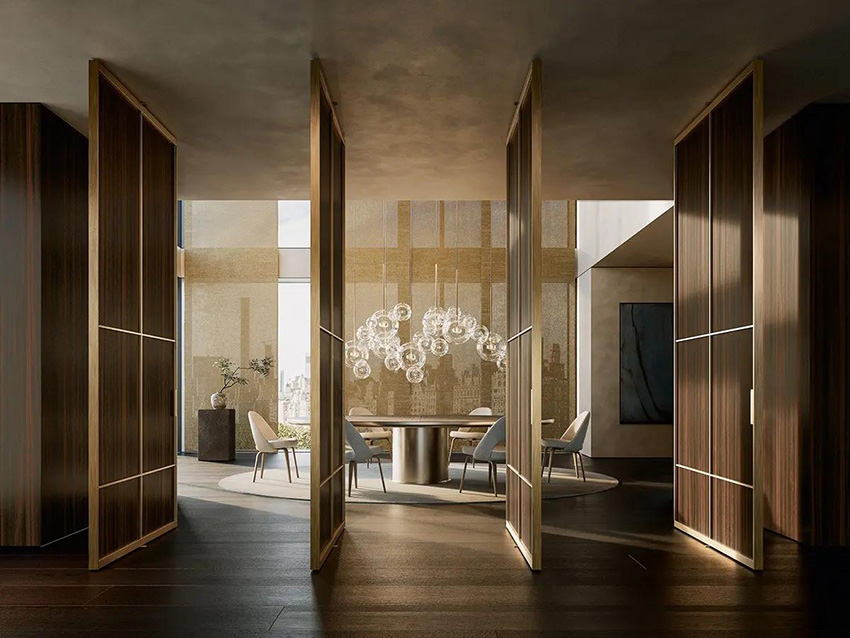
A floor-to-ceiling pivot door draws the eye upward and reinforces the architectural scale of an interior. This style can be especially compelling in homes with high ceilings, generous passageways or carefully aligned wall panels. Full-height designs can also create a seamless visual connection between adjacent spaces. Yet dramatic scale requires thoughtful technical planning: panel weight, hardware capacity, installation tolerances and floor or ceiling conditions all matter. The precise dimensions that can be achieved depend on the door system and the project. For inspiration on premium architectural doors and custom interior concepts, explore DAYORIS.
MINIMALIST INTERIORS
Flush and Seamless Pivot Door Concepts
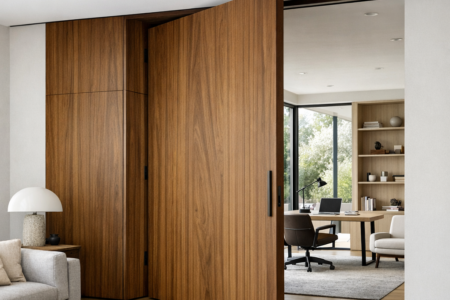
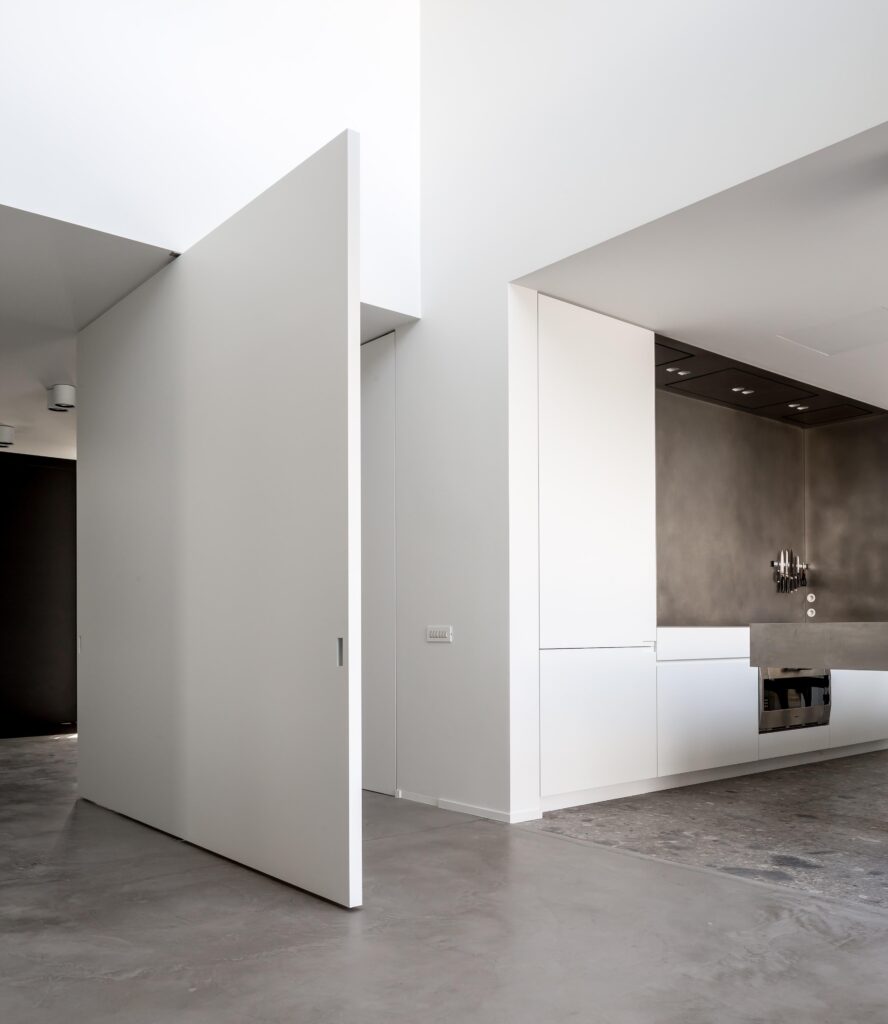
A flush pivot door is an excellent design direction when the goal is subtlety rather than spectacle. With a carefully coordinated wall finish and discreet detailing, the door can appear as part of a continuous architectural surface. Painted panels, wood veneers and selected textured finishes each create a different atmosphere. Some interiors benefit from a quiet tonal match, while others use a contrasting panel to add depth and character. The success of a seamless design depends on much more than appearance: the pivot location, reveal gaps, handle placement and adjacent wall construction must all be considered early in the project.
MATERIALS AND FINISHES
A Material Palette That Defines the Room
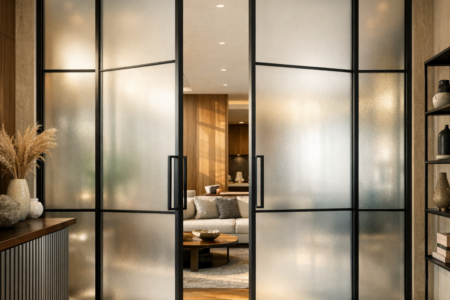
Wood brings warmth and natural texture; painted finishes can provide a calm, unified appearance; metal details create sharp definition; and glazing can help light travel between connected spaces. A sophisticated pivot door balances these visual qualities with practical requirements. Consider surface durability, ease of maintenance, privacy and the way the material will age. Door construction and total panel weight must also be compatible with the selected pivot mechanism. In a contemporary blue-gray interior, for example, a pale oak panel can provide welcome warmth, while a charcoal or navy door can deliver a more sculptural effect. The right finish is the one that works with the entire room.
DESIGN BENEFITS
Movement, Proportion and Architectural Character
Pivot doors offer a distinctive opening movement and considerable freedom in architectural expression. They can create memorable transitions and work with a broad range of panel materials and visual styles. In suitable projects, a pivot mechanism may support larger or differently proportioned panels than a conventional hinged approach, subject to the specifications of the chosen system. However, pivot doors are not ideal for every application. Because the panel rotates around an offset point, the swing path needs careful evaluation. Acoustic isolation, privacy, accessibility, seals and clearances should also be assessed, particularly for bedrooms, bathrooms and high-traffic areas. Good design always balances visual ambition with daily use.
PROJECT PLANNING
What to Consider Before Selecting an Interior Pivot Door
Begin by measuring the opening and understanding how people will move around it. Review furniture placement and the available swing clearance on both sides of the panel. Next, define the functional priorities of the room: does it require privacy, light transmission, acoustic separation or a particularly durable finish? Discuss structural support, mounting details, door weight, hardware capacity and installation tolerances with the appropriate specialists. Finally, coordinate the door with nearby flooring, ceiling lines, lighting and wall finishes. The most successful pivot door projects are the ones where technical details and aesthetics are developed together from the outset.
FEATURED RESOURCE
Discover DAYORIS Architectural Interior Doors
For more architectural door inspiration, visit DAYORIS, a specialist resource featuring modern interior door concepts, custom proportions and contemporary design applications. Its collection of ideas can help you explore different directions for a residential or professional interior, whether you are drawn to a dramatic pivot statement or a discreet, seamless transition. Browse the DAYORIS website to learn more about its architectural door approach and available solutions. Interior Pivot Door is an independent editorial inspiration site; specifications, availability and suitability should always be confirmed directly with the relevant provider.
THE JOURNAL
Insights for Better Interior Door Design
Our editorial guides examine the details that make architectural doors successful: pivot hardware, proportion, material selection, visual continuity and practical project planning. We also explore how door design interacts with broader interior trends, from warm minimalism and natural finishes to expressive, contemporary spaces. Whether you are beginning a renovation or developing an architectural concept, informed decisions start with understanding the possibilities and the constraints. Explore the journal for further ideas and perspectives.
How Interior Pivot Doors Innovate Transitional Spaces in Contemporary Luxury Homes
Optimizing Natural Light Control with Interior Pivot Doors in Contemporary Luxury Homes
The Role of Custom Interior Pivot Doors in Enhancing Privacy and Flow in Open-Concept Luxury Homes
EXPLORE THE POSSIBILITIES
Make Every Transition Part of the Architecture
A thoughtfully designed pivot door can do more than connect rooms. It can shape the rhythm of a hallway, frame a view, introduce a tactile material or give an interior a memorable identity. Discover our pivot door design guides, and visit DAYORIS for additional architectural door inspiration.