In contemporary luxury architecture, controlling natural light within interior spaces is an art as much as a science. Interior pivot doors have emerged as a compelling architectural element to manage daylight effectively, balancing illumination, privacy, and aesthetics. This article explores how interior pivot doors can be strategically used to optimize natural light distribution in modern luxury homes, while contributing to sophisticated design narratives.
Understanding Natural Light Challenges in Contemporary Interiors
Modern open-concept designs often emphasize expansive glass walls and open floor plans that flood interiors with natural light. However, uncontrolled sunlight can lead to glare, heat gain, and compromised privacy. The challenge for architects and interior designers lies in modulating this light to enhance comfort without sacrificing openness and flow.
Traditional swinging doors can interrupt light pathways or appear bulky in luminous spaces. Here, interior pivot doors offer a unique alternative, combining minimal floor space intrusion with the ability to modulate light and views dynamically.
The Role of Interior Pivot Doors in Light Modulation
Pivot Mechanism and Light Control
Unlike conventional hinged doors, pivot doors rotate around an offset vertical axis, allowing partial or full opening angles that can be precisely controlled. This rotational feature enables owners to adjust not only passage but also how much light penetrates adjoining rooms.
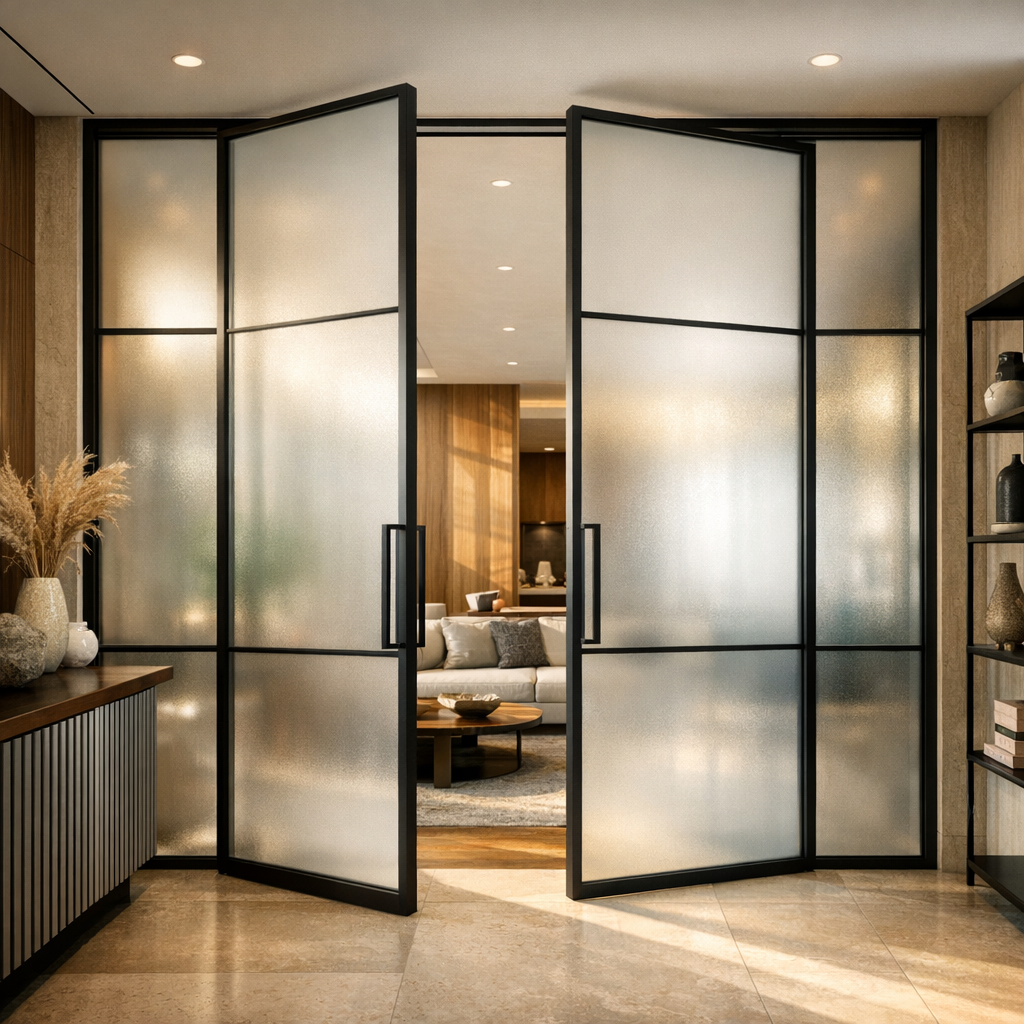
The door panel itself can be crafted from translucent, frosted glass or combined materials that diffuse incoming light while maintaining privacy. When closed or partially open, the door can soften harsh sunlight, reducing glare and enhancing ambient illumination.
Integrating Materials for Enhanced Daylight Effects
The choice of materials is crucial. Glass pivot doors with wood or metal framing introduce warm or cool color temperatures and textures that influence how light is perceived in the space. For instance:
- Frosted or sandblasted glass diffuses direct sunlight, mitigating hotspots and creating gentle, even lighting.
- Wood slats or perforated metal inserts can create patterned shadows and add visual interest while modulating brightness.
- Smart glass technologies, although not inherently part of all pivot doors, can sometimes be incorporated to switch transparency levels for dynamic light control.
Choosing the right combination depends on site orientation, interior color palette, and desired ambiance.
Architectural Applications: Creating Zones with Light and Structure
Interior pivot doors function as spatial dividers in an open layout without completely blocking light flow. For example, in luxury living areas adjoining dining rooms or home offices, pivot doors can isolate spaces visually while allowing daylight to permeate through translucent panels.
This flexibility is particularly useful in multi-functional rooms where shifting between openness and enclosure is frequent. Unlike fixed glass partitions, pivot doors provide the option to open fully for ventilation and light maximization or close partially to define intimate zones.
Case Study: Light Layering in a Contemporary Home
Consider a modern residence where the kitchen and living room are separated by a large interior pivot door composed of frosted glass and dark wood veneer. During the day, the door remains closed but permits soft light transmission, reducing glare from west-facing windows. As evening falls, the door can swing open to visually and physically integrate the spaces, supported by supplementary artificial lighting.
This dynamic relationship enhances user experience by harmonizing natural elements with interior architecture.
Technical Considerations for Seamless Light Integration
Hinge Placement and Door Size
Optimal performance in light control requires precise specification of pivot hardware. The offset pivot creates a subtle gap between the door and frame, which must be minimized or planned if privacy in light transition is critical.
Larger pivot doors maximize glazing area, boosting light admission. However, their weight and material choice may impact operational smoothness; thus, consulting with specialists in premium architectural doors, such as those showcased on DAYORIS, is advisable.
Frame and Seal Detailing
High-quality seals prevent unwanted light leaks where total darkness or privacy is desired, especially in bedrooms or media rooms. Conversely, intentional gaps can create lighting effects or air circulation.
Design Recommendations for Homeowners and Professionals
- Assess sunlight patterns throughout the day to position pivot doors where light modulation is most beneficial.
- Select glazing options based on privacy needs and aesthetic preferences; frosted glass is versatile, while textured or tinted glass adds unique ambiance.
- Coordinate door finishes with surrounding materials for harmonious integration; natural wood complements warm interiors, whereas metal suits modern minimalism.
- Explore bespoke pivot door designs that incorporate built-in blinds or layered panels for enhanced control.
- Consult with experts in pivot door hardware and installation, referencing resources like Interior Pivot Door’s pivot door solutions to ensure technical feasibility and premium quality.
Conclusion
Interior pivot doors stand out not only as elegant architectural features but also as practical tools for natural light management in contemporary luxury homes. Their unique pivoting mechanics, combined with thoughtful material and design choices, empower creators and homeowners to sculpt interior environments rich in comfort, beauty, and function.
For inspiration and expert guidance on selecting the optimal interior pivot doors to control daylight while elevating your contemporary home’s design, explore the curated collections and insights offered by DAYORIS and visit Interior Pivot Door’s about page to learn more about premium pivot door options.