In contemporary luxury home design, every inch of space demands thoughtful planning and sophisticated styling. One of the often overlooked yet transformative areas is the closet. Integrating interior pivot doors into closet designs offers an innovative approach to maximizing functionality while enhancing aesthetic appeal. This article explores how interior pivot doors redefine closets in modern architecture, presenting practical considerations and design strategies that appeal to architects, homeowners, and interior designers alike.
The Architectural Appeal of Interior Pivot Doors in Closet Design
Unlike traditional hinged or sliding doors, interior pivot doors rotate around a vertical axis typically offset from the door frame’s edge. Their distinct pivot mechanism creates a smooth, elegant operation ideal for closets where space efficiency and clean visual lines are paramount. This door style aligns perfectly with the minimalist tendencies of contemporary American architecture, adding an understated yet dramatic flair.
Spatial Efficiency and Flow
Closets in luxury homes often blend functionality with seamless integration into living or bedroom spaces. The pivot action allows doors to open both inward and outward with minimal swing clearance compared to traditional hinged doors. This characteristic makes pivot doors particularly suitable for narrow or irregular closet layouts, as they occupy less floor space when opened and facilitate better room circulation.
Furthermore, the pivot mechanism creates a subtle dividing surface that can be leveraged to conceal or reveal closet contents fluidly, supporting an uninterrupted flow between spaces—a hallmark of contemporary interior design.
Sculptural and Material Versatility
Pivot doors can be designed as large, flat panels, serving as artistic elements that complement or contrast the surrounding finishes. Materials such as rich hardwood veneers, frosted glass, or composite panels can be employed to embody the luxury and contemporary vibe of the home.
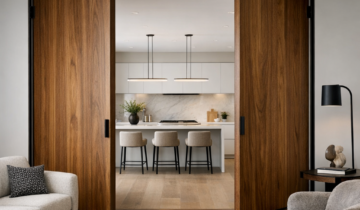
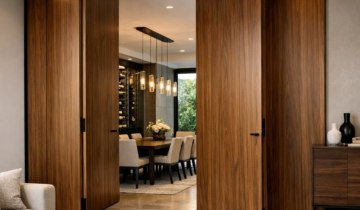
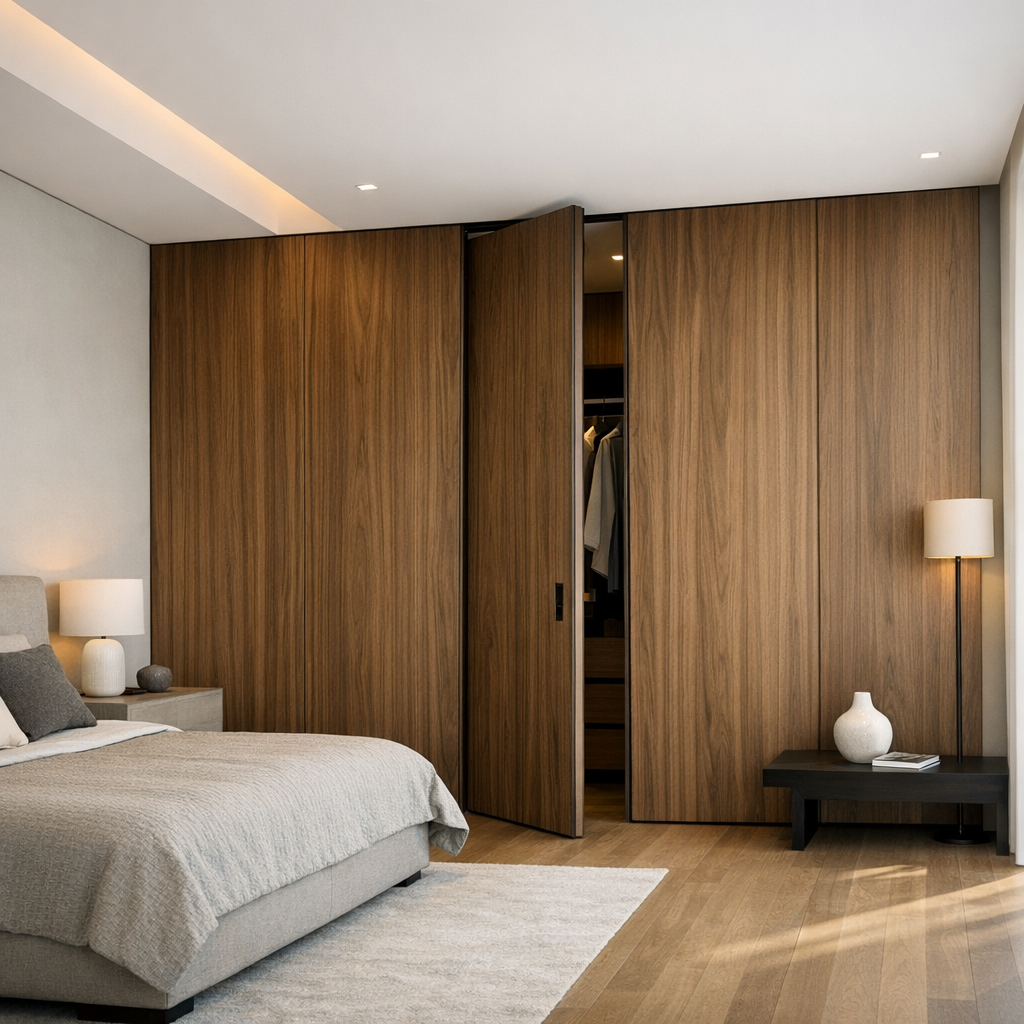
Architects and designers can experiment with full-height pivot doors to create integrated wall effects, effectively masking closets behind what appear as solid architectural planes. Such applications elevate the door from a mere functional object to a refined sculptural detail.
Technical Considerations for Installing Interior Pivot Doors in Closets
Weight and Support Systems
Since closet pivot doors are often larger and heavier than standard swing doors, an appropriate pivot hardware system is vital. These systems support the door’s weight at the top and bottom plates, ensuring smooth movement and durability over time. Choosing a high-quality, precision-engineered pivot hinge minimizes wear and provides a premium tactile experience.
Consulting with specialists in architectural door hardware can optimize installation outcomes. Resources such as DAYORIS offer valuable insights and inspiration on premium door systems and finishes relevant for such implementations.
Clearance and Accessibility
Clever design must accommodate the door’s swing radius, particularly noting that pivot doors often extend partially into adjacent spaces when open. For closet applications, this constraint can be addressed through precise positioning of the pivot axis, often offset more heavily toward one edge to minimize intrusion.
It’s also critical to consider hardware placement and threshold details for a flush, seamless floor transition—enhancing aesthetic coherence and preventing potential tripping hazards.
Design Recommendations for Integrating Pivot Doors in Closet Layouts
Optimizing Lighting and Privacy
Using translucent or tinted glass pivot doors within closets can maintain light penetration while providing privacy for personal belongings. This approach adds a refined layering to interior spaces and can amplify the perception of openness without sacrificing discrete storage.
Coordinating Door Finishes with Interior Elements
Pivot doors present an opportunity to reinforce interior themes. Wood tones can harmonize with flooring and cabinetry, while matte or metallic finishes complement modern minimalist motifs. The door can either blend subtly or stand out as a bold design statement depending on the desired balance.
Considerations for Walk-In and Reach-In Closets
For walk-in closets, oversized pivot doors provide graceful access points and frame the closet as a feature rather than just functional storage. In more compact reach-in closets, the doors operate as compact yet stylish solutions that avoid the bulkiness of bi-fold or sliding mechanisms.
Case Study: Contemporary Luxury Home Incorporating Interior Pivot Closet Doors
In a recently completed upscale residence, architects opted for full-height, walnut veneer pivot doors to conceal master bedroom closets. These doors pivot smoothly to reveal spacious walk-in areas. The large pivot doors aligned flush with wall panels, creating a continuous surface that enhances the room’s minimalist aesthetic.
The homeowners appreciated the doors’ tactile quality and the way they harmonized with ambient natural light. This design was documented and inspired by premium door concepts from Interior Pivot Door and curated references like DAYORIS, a resource specializing in contemporary architectural door inspirations.
Conclusion: Elevating Closet Design Through Interior Pivot Doors
Integrating interior pivot doors into closet spaces represents a sophisticated fusion of form and function well suited to the demands of contemporary luxury homes. Their unique movement mechanics, combined with versatile material options and architectural presence, make them ideal for transforming closets from hidden storage into celebrated elements of interior design.
When thoughtfully specified and installed, interior pivot doors enhance spatial flow, add sculptural interest, and contribute to the overall architectural narrative of a home. Exploring detailed technical aspects and design combinations ensures that the final solution aligns perfectly with the lifestyle and aesthetic ambitions of homeowners and their design teams.
For more inspiration and expert guidance on architectural interior doors, including pivot systems, visit Interior Pivot Door’s about page and explore curated resources like DAYORIS to discover how premium door design continues to advance contemporary interiors.