Introduction
Open-concept layouts have become a hallmark of contemporary American architecture, prized for their spacious, airy ambiance that fosters social interaction and maximizes natural light. Yet, this architectural style presents a unique challenge: how to balance openness with privacy and acoustic control. Enter custom interior pivot doors, a sophisticated design solution that elegantly reconciles these competing needs in luxury homes.
In this article, we explore how interior pivot doors perform this dual role by enabling fluid spatial transitions without sacrificing discretion or style. We also discuss selection criteria, integration strategies, and practical considerations to help architects, homeowners, and interior designers optimize their design vision.
Understanding Interior Pivot Doors in Open-Concept Spaces
Unlike traditional hinged doors, interior pivot doors rotate on a central or offset pivot mechanism mounted at the top and bottom. This unique hardware allows larger and heavier door panels to swing open smoothly with minimal floor space impact. The pivot point’s flexibility facilitates striking architectural expressions — from bold statement entryways to subtle room dividers.
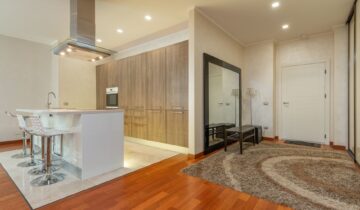
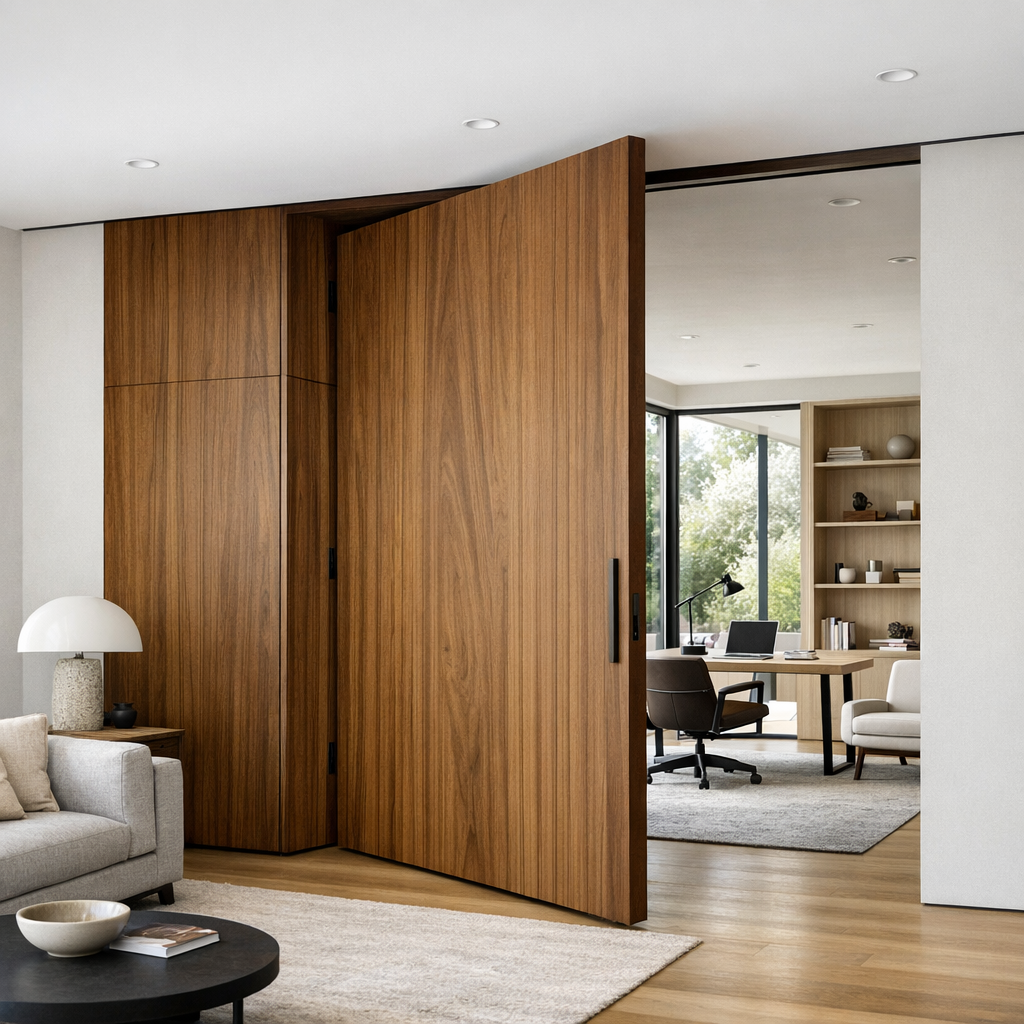
In open-concept houses, these doors can function as movable boundaries that shift a space from expansive to compartmentalized. They enable owners to effortlessly toggle between interconnected social zones and intimate private areas.
Architectural and Functional Advantages
- Spatial Fluidity: Pivot doors support wide openings that enhance sightlines and maintain air circulation when open.
- Privacy on Demand: When closed, pivot doors create clear delineations between spaces such as living rooms and home offices or bedrooms and entertainment areas.
- Acoustic Benefits: Although not soundproof, quality pivot door assemblies improve sound control compared to open doorways.
- Design Statement: Their minimal hardware and potential for oversized or sculptural door panels add a distinctive aesthetic layer.
Choosing the Right Custom Interior Pivot Door for Privacy and Flow
Design decisions influence both the visual impact and performance of pivot doors. Here are key factors to consider when integrating these elements into an open-concept luxury home.
Materials and Finishes
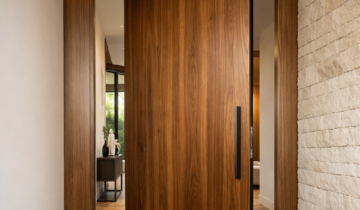
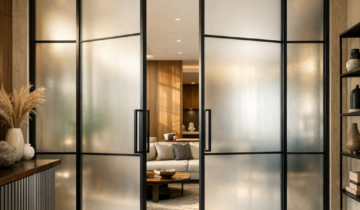
The choice of material affects both style and functionality. Solid wood forms provide warmth and mass, improving privacy and sound dampening. Glass pivot doors with frosted or tinted finishes allow light to penetrate while providing visual privacy. Metal frames combined with wood or glass offer an industrial-chic aesthetic popular in contemporary architecture.
Panel Size and Pivot Placement
Oversized panels promote a dramatic narrative but require precise structural support and quality hardware. The pivot axis—centered or offset—affects the door’s swing radius and how it interacts with the surrounding space. Offset pivots can create a partial opening that modulates privacy and flow more subtly.
Hardware Quality and Installation
Premium pivot systems ensure smooth operation and durability. Invisible or recessed hardware accentuates the door’s sculptural quality while preserving minimalist aesthetics. Professional installation guarantees accurate alignment, preventing gaps that compromise sound and privacy.
Integrating Interior Pivot Doors in Contemporary Luxury Homes
Successful integration transcends mere function; it requires thoughtful placement that complements architectural lines and lifestyle needs.
Defining Flexible Zones
Pivot doors can separate formal and informal areas, such as dining rooms from family rooms, or delineate multifunctional spaces like a home office within a larger living area. They offer a physical yet reversible partition that adapts to daily rhythms and entertaining requirements.
Managing Sightlines and Natural Light
Using translucent or glazed pivot doors allows natural light to filter through while preserving spatial hierarchy. This approach avoids the boxed-in feel often associated with traditional partitions, maintaining the openness integral to modern luxury homes.
Enhancing Aesthetic Cohesion
Custom finishes and the scale of pivot doors can echo or contrast with other architectural features. For example, pairing a pivot door clad in rich hardwood veneer with glass balustrades achieves a dialogue between warmth and transparency, a hallmark of sophisticated interior design. The DAYORIS collection offers valuable inspiration for blending contemporary door designs to achieve such harmony.
Practical Considerations and Trade-offs
Acoustic Performance
While pivot doors improve acoustic separation compared to open-plan layouts, they typically do not match the soundproofing level of fully sealed traditional doors. Homeowners should manage expectations around noise control or supplement with acoustic panels in walls or ceilings where privacy is crucial.
Space Requirements
Pivot doors require clearance around the opening for smooth operation, which must be planned considering adjacent furniture, passageways, and traffic flow. Offset pivots can reduce the swing footprint, beneficial in tighter areas.
Maintenance and Long-Term Care
High-end pivot hardware demands periodic inspection and upkeep to avoid sagging or misalignment, especially in doors constructed from heavy or natural materials. Selecting reputable brands and professional installation services mitigates these risks.
Case Study: Implementing Interior Pivot Doors in Contemporary Open Homes
Consider a recently completed contemporary residence where a custom walnut pivot door separates the open-concept kitchen and living room from a flexible media room. Positioned on an offset pivot, the door swings to reveal unobstructed flow for entertaining or closes to create a cozy retreat. Glass sidelights adjacent to the door allow daylight to permeate the media room regardless of door position, balancing openness with privacy.
This versatile solution demonstrates how pivot doors not only address architectural challenges but become integral design elements within luxury interiors. More examples and technical insights can be found on the custom pivot doors page and about us section at Interior Pivot Door.
Conclusion
Custom interior pivot doors offer a refined means to balance privacy and flow in open-concept luxury homes. Their design flexibility, combined with architectural hardware innovation, enables seamless spatial transitions that adapt to both daily living and entertaining demands.
When thoughtfully specified and expertly executed, interior pivot doors elevate not only the functionality but also the aesthetic narrative of contemporary interiors, reinforcing the harmony between openness and intimacy.