In contemporary American architecture, multi-functional living environments are increasingly prized for their ability to adapt to dynamic lifestyles. Interior pivot doors play a critical role in achieving seamless spatial transitions in these environments. Unlike traditional hinged doors, pivot doors offer greater design flexibility and enhanced spatial fluidity, catering perfectly to luxury residences and innovative interior layouts.
Why Interior Pivot Doors Are Ideal for Multi-Functional Spaces
Multi-functional spaces often require flexible boundaries that accommodate changing needs, such as combining living and dining areas, creating temporary offices, or delineating private zones without sacrificing openness. Interior pivot doors answer these requirements by enabling wide swing arcs and customizable pivot points that redefine how rooms connect and separate.
Customizable Pivot Axis: Central Versus Offset
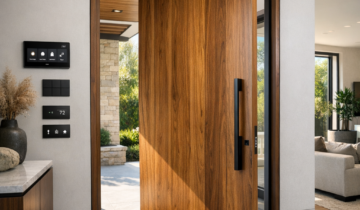
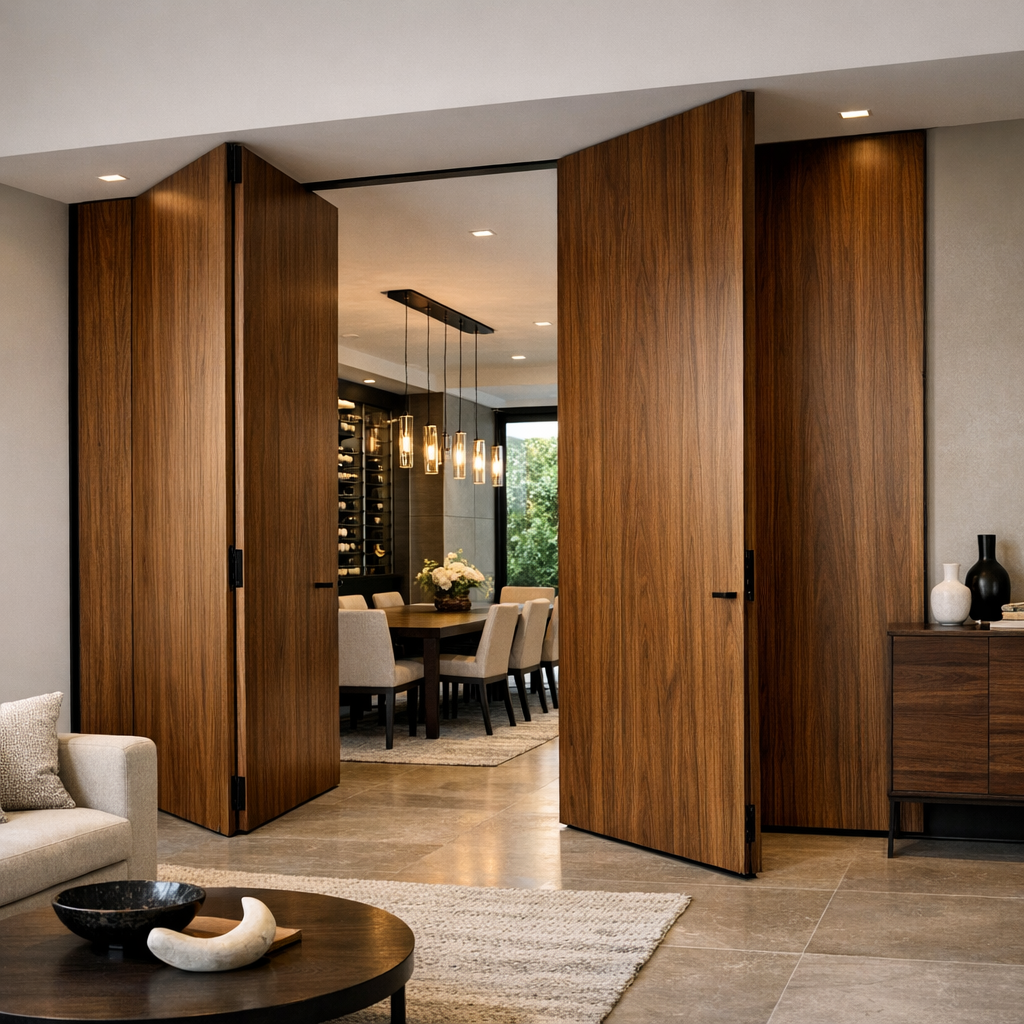
One standout feature is the ability to position the pivot axis centrally or offset from the edge. A centrally located pivot creates symmetrical rotation, ideal for visual balance and ease of passage in large openings. Conversely, an off-center pivot produces dramatic spatial effects, allowing the door to open with sweeping gestures that can partially reveal or completely conceal adjoining areas.
Such flexibility is invaluable in multi-functional interiors where the door itself becomes an architectural statement and a spatial tool, rather than a mere barrier.
Materiality and Texture: Enhancing Spatial Continuity
Material choice for interior pivot doors influences both aesthetic coherence and sensory experience. Modern luxury homes benefit from doors crafted in rich woods, frosted glass, or metal-coated surfaces that align with the surrounding décor. This material harmony ensures the door seamlessly merges with walls and cabinetry, preserving uninterrupted sightlines when closed.
For example, pairing pivot doors with natural wood finishes facilitates a warm, organic connection between rooms, while glass panels allow natural light to traverse deep into interiors, amplifying openness without compromising room differentiation.
Technical Considerations for Installation in Multi-Functional Designs
The successful integration of interior pivot doors in versatile spaces involves several technical factors:
- Structural Support: Pivot doors require reinforced flooring and header framing to manage door weight and pivot mechanics.
- Clearance Planning: Designers must ensure ample clearance around pivot doors to accommodate their wider swing paths, which exceed that of traditional hinged doors.
- Hardware Selection: Choosing reliable pivot hardware with smooth bearings and concealed mechanisms is key to both aesthetics and function.
- Sound Mitigation: In multi-functional spaces where privacy is intermittent, attention to door seals and material density can regulate acoustic performance without permanent separation.
The Impact of Pivot Doors on Circulation and User Experience
Interior pivot doors contribute significantly to circulation flow. Unlike conventional swing doors that intrude into adjacent areas, pivot doors can be designed to swing in both directions or to a particular segment of the wall, allowing enhanced movement pathways. This characteristic reduces bottlenecks and creates moments of surprise or release as occupants transition between spaces.
Moreover, the elegant movement of pivot doors enhances user interaction, reinforcing the spatial narrative of contemporary architecture. These doors invite exploration, offering possibilities for the same opening to function as a wide threshold or a discreet partition.
Design Inspirations and Resources: Exploring Contemporary Trends
To inspire innovative approaches to interior pivot doors, consulting specialist resources can be invaluable. DAYORIS, for instance, showcases a broad spectrum of premium architectural interior door designs that exemplify cutting-edge pivot door applications. This platform highlights diverse materials, finishes, and minimalist to bold forms, encouraging designers and homeowners to experiment within the pivot door typology.
For detailed information about various pivot door options, construction methods, and design ideas, Interior Pivot Door’s pivot door collection is another essential practical resource, offering insights into the relationship between technical specifications and design intent.
How to Approach a Renovation Involving Interior Pivot Doors
Integrating interior pivot doors during renovation requires a strategic evaluation of existing architectural conditions and future spatial aspirations. Start by assessing wall thickness and load-bearing capabilities, since pivot doors often require modifications in framing. Engage professionals experienced in pivot systems to address mechanical installation and finish alignment accurately.
Consider the intended use of the space post-renovation to determine the optimal pivot axis, door size, and material. Communicating early with architects and designers ensures that pivot doors enhance rather than complicate the multi-functional nature of living areas.
Conclusion: Elevating Contemporary Living With Sophisticated Functionality
In conclusion, interior pivot doors uniquely support the shifting demands of modern multi-functional interiors by providing technical versatility, aesthetic refinement, and enhanced spatial dynamics. Their capacity to unify and divide spaces gracefully makes them an indispensable element in luxury American home design.
For homeowners, architects, and designers seeking to elevate their interior environments with a door system that embodies elegance, adaptability, and modernity, interior pivot doors present an exceptional solution worth exploring.